This is a descriptive guide on what aurora looks like deep in the middle latitudes at different storm levels, based on my 25+ years of experience in observing aurora from Slovenia at 45°N geomagnetic latitude (MLAT). Locations with similar geomagnetic latitude – and therefore similar aurora visibility in the northern hemisphere include:
- Europe: Hungary, Slovenia, north Italy, south France, north Spain.
- North America: North & South Carolina, Oklahoma, California.
- Asia: north China, central Russia.
In the southern hemisphere:
- Australia & New Zealand: Victoria (south Australia), central parts of New Zealand
This is naked eye aurora visibility under relatively dark Bortle class 3 (rural) skies. Significant light pollution and/or moonlight will diminish the visibility of aurora.
Storm categories (levels) and aurora visibility
Category: G1 (minor)
Level of activity: very low.
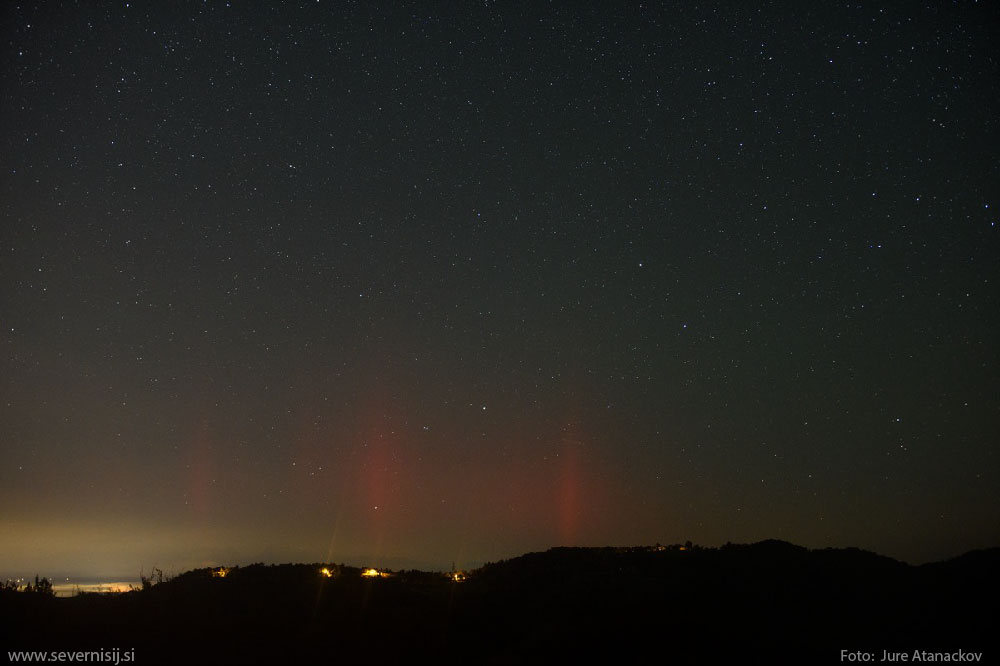
Naked eye visibility: aurora is generally not visible with the naked eye, except during stronger substorms. Occasionally aurora can become briefly visible as faint diffuse glows or faint pillars. Color may be borderline detectable.
Category: G2 (moderate)
Level of activity: low.
Naked eye visibility: faint to moderately bright aurora may reach up to 10-15° high in the northern sky. Usually white to faint red pillars and rays. Visible only during substorms, typically for short periods of time (minutes), with long periods with no activity in between, lasting tens of minutes and up to hours.

Category: G3 (strong)
Level of activity: moderate.
Naked eye visibility: moderately bright to bright aurora may reach up to 20-40° high in the northern sky. Best seen under a dark sky, but detectable under more light polluted skies (Bortle class 5, suburban sky). Structures such as rays and pillars are clearly visible, obviously changing brightness and moving. Colors are bright and obvious. Long periods of activity (substorms), with about equally long periods of no visible aurora. If the display happens in the evening hour it catches the attention of the general public.

Category: G4 (severe)
Level of activity: high.
Naked eye visibility: bright to very bright aurora may reach up to the zenith (90°) or even slightly beyond. Structures such as rays and pillars are bright, well defined and obvious. Arcs and curtains/rayed arcs may be visible low in the north. Aurora is dynamic, with changing structures and brightness. Colors are obvious, bright and vivid. Aurora is visible most of the time with short periods of low to no activity. Typically noted by the general public. May be visible even in light polluted suburban and urban skies (Bortle class 5-7).

Category: G5 (extreme)
Level of activity: very high.
Naked eye visibility: very bright to brilliant aurora may reach across half or more of the sky. It may be sufficiently bright to cast clear shadows and obscure most stars. The surroundings may be distinctly illuminated in the color of the aurora, usually red, even in suburban areas. Colors are obvious, bright and vivid. The structures are dynamic: rays can rapidly change brightness and move rapidly, shapes and colors of aurora change quickly. Aurora is visible most or all of the time, waxing and waning with successive substorms. Always noted by the general public.
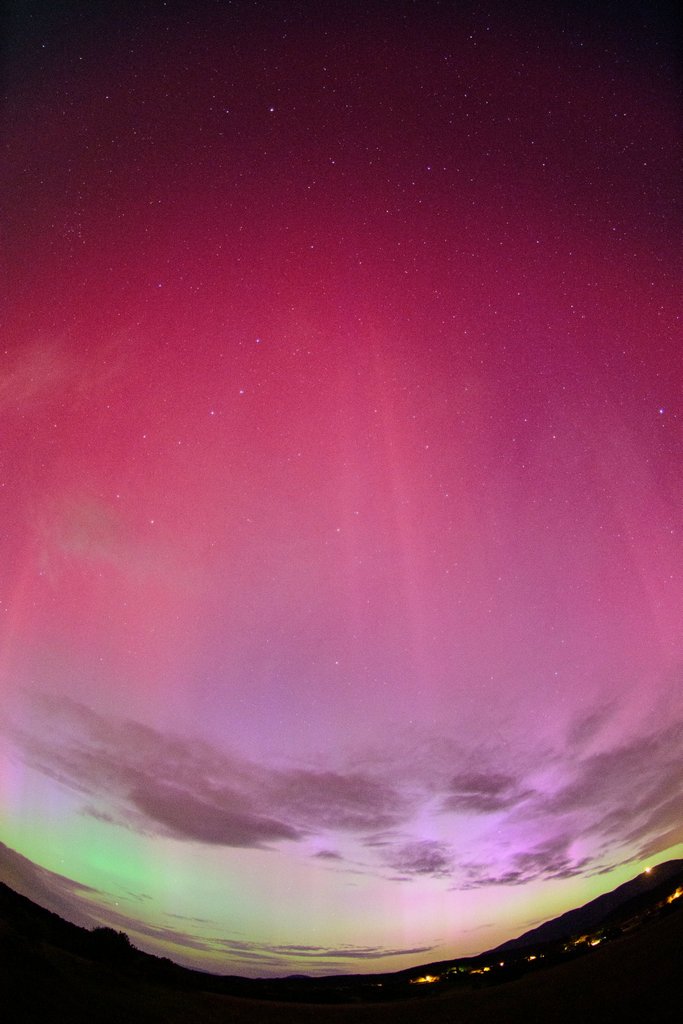
Every geomagnetic storm and every aurora has its own character, there may be big differences between storms of the same category. I have seen G4 storms with only faint visual aurora up to about 30° high, and I have seen G4 storms with bright aurora that covered 2/3 of the sky. Take these descriptions only as general guidance.