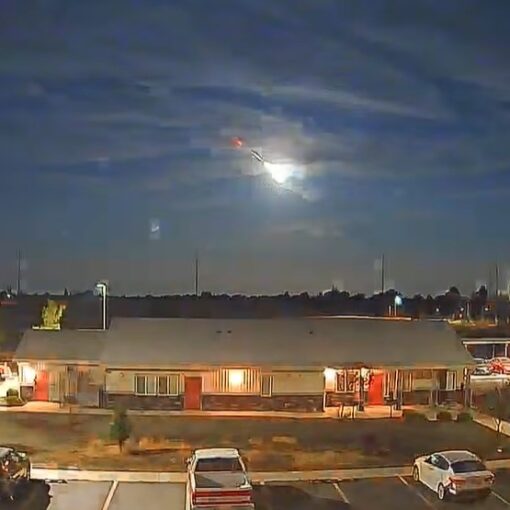
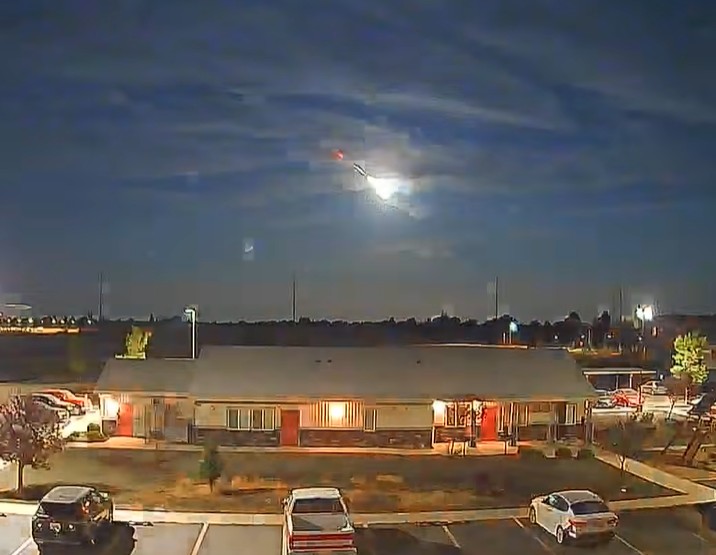
Missed the Perseids? No worries, 2026 is a great year for meteor showers and there is much more to come. Here’s what’s next!
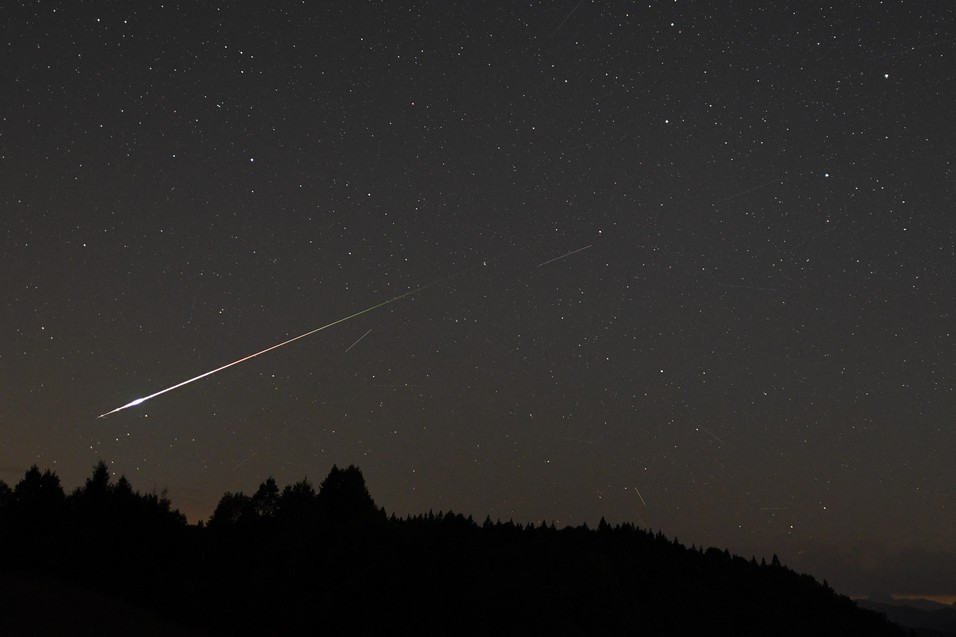
Perseid fireball low in the northwestern sky over Medvedje Brdo, Slovenia. August 12th, 2026. Photo: Jure Atanackov.
Your best bet is to try tonight (August 13/14th)! The night after the peak is still exciting, with the Perseids appearing at about half the rate of the peak night. Well worth being under the stars!
October: the Orionids
The Orionids peak on October 21st, with about 20-25 meteors per hour, about one third to one quarter of Perseid peak rates. Peak rates are visible in the final predawn hours (3-6h local time). There is a waxing gibbous Moon in the sky, but it sets by the prime time for the Orionids. The Orionids are very similar to the Perseids: colorful, swift, with trains.
December: the Geminids
This is by far the best meteor shower. It peaks on December 14-15th with about 150 meteors per hour! High rates, as high as the Perseid peak, can be seen the night before the peak too. The Geminids are visible throughout the night, with the best viewing time between late evening and early morning hours. This year the peak is moonless, offering perfect observing conditions!
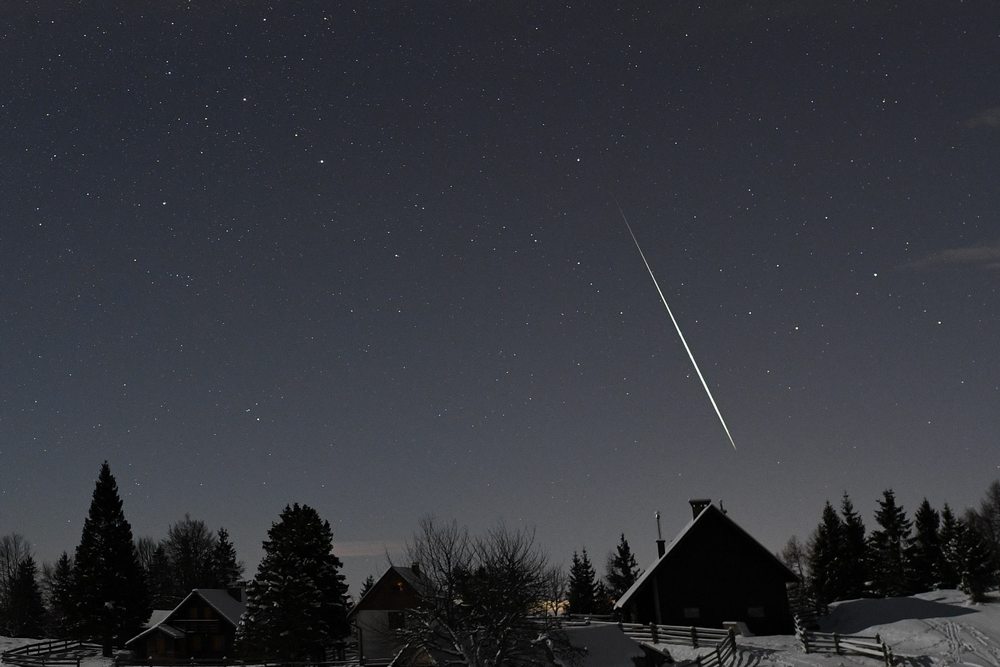
Bright Geminid low in the southern sky over Krvavec, Slovenia. December 14th, 2023. Photo: Jure Atanackov.
January: the Quadrantids
The sharp Quadrantid peak is expected on January 4th at 3-4h UTC, favouring Europe. Rates elsewhere in the world will be somewhat lower. The waning crescent Moon three days before new will not affect the sky. The Quadrantids are every bit as good as the Perseids and can even rival the Geminids. Absolutely worth braving the January cold.
The Perseids next year (2027)
Want to see a Perseid peak? You will need to wait a year, but there is good news: the peak in 2027 will likely be stronger than in 2026. The peak on August 12th will likely favour North America (around 8-10h UTC).
There are also predictions for some dust trail encounters and secondary activity enhancements/peaks. The most important secondary peak may come around 00h UTC on August 13th, perhaps as strong as the main peak or stronger. The timing favours Europe.
There will be a waxing gibbous Moon in the sky, a few days from full. Fortunately it will be in Sagittarius, low in the sky and it will set by about 1 am local time, leaving the best (morning) hours dark.